Project GDNF UpReg: Personalising the Path to Mental Healthcare
The Challenge: Beyond “Trial and Error” in Schizophrenia
Schizophrenia is a complex spectrum disorder where treatment still largely relies on a challenging process of trial and error. Dopamine is a vital chemical messenger that helps the brain regulate everything from movement to emotions; however, in about 60% of schizophrenia patients, an imbalance of this chemical can trigger distressing symptoms such as hallucinations and delusions. While standard antipsychotics work by broadly blocking dopamine receptors, they often fail to address the unique biological drivers that likely vary from person to person. As a result, many young people experiencing first-episode psychosis receive care that is only partially effective and frequently accompanied by severe side effects, such as significant weight gain and hormonal changes, that can impact long-term health. This reality highlights a critical need to uncover the biological mechanisms underlying different “types” of schizophrenia, paving the way for tailored treatments that improve patient outcomes and reduce suffering.
A New Biological Map: The GDNF-High Subgroup
To provide more targeted care, the GDNF UpReg consortium, funded by ERA-NET NEURON, set out to group patients based on their unique biology rather than just their symptoms. In research detailed in their 2022 paper published in Molecular Psychiatry by Matlik et al., and in their 2025 preprint by Runnenberger et al., the team successfully identified a distinct “GDNF-high/dopamine-high” subgroup which accounts for approximately one in five (20%) schizophrenia cases.
The Power of Multinational Collaboration
The success of GDNF UpReg demonstrates the vital role of ERA-NET NEURON funding in enabling interdisciplinary, cross-border research. This ambitious project, led by consortium coordinator Prof. Jaan-Olle Andressoo (University of Helsinki, Finland), brought together clinical experts Prof. Peter Falkai (Ludwig Maximilian University of Munich, Germany) and Dr T. Timmusk and his biotechnology team at Protobios (Estonia).
This combination allowed the team to connect biological mechanisms, human patient data, and clinical translation within a single programme:
- Finland provided the long-standing expertise in GDNF biology and the unique mGdnf-Hyper mouse model.
- Germany contributed deeply phenotyped first-episode psychosis cohorts, providing essential CSF, serum, and MRI data.
- Estonia the translational assay.
No single laboratory could have achieved this alone. The consortium’s strength lies in its ability to follow a single biological hypothesis from discovery to mechanistic proof, and finally, to therapeutic design.
The GDNF-high patient subgroup has been observed in multiple independent patient cohorts. While the remaining 80% of patients likely belong to other biological subtypes that are still being defined, identifying this first specific group serves as a powerful proof-of-concept that schizophrenia can be divided into manageable, molecularly distinct categories which will likely guide personal treatment in the future.
For this 20% subgroup, the consortium’s findings offer compelling proof that the disease is driven by an excess of the GDNF protein. This excessive GDNF signaling acts as an ‘upstream’ trigger, sparking a dopamine surge in the striatum while disrupting normal signaling in the prefrontal cortex, the brain region that governs executive function. By uncovering this exact mechanism, the team has established a roadmap to identify patients with this specific biological profile. This knowledge allows them to screen existing medications for more effective near-term treatments, while simultaneously paving the way for the development of new, small-molecule drugs tailored to target this pathway at its source.
Schizophrenia has for too long been treated as though all patients share the same biology. Our hope is that this work will help move psychiatry from trial-and-error prescribing towards more precise, subgroup-guided care, where the right patients can be identified early and offered treatments that are both more effective and more tolerable.
From Discovery to the Clinic: The 9-Protein Blood Test
To turn this biological discovery into a practical tool for doctors, the team identified a 9-protein classifier. This tool works as a biological “signature” in the blood that in the future may allow the one-in-five “GDNF-high” subgroup to be identified through a standard blood test. Once validated in larger patient cohorts, this tool may represent a landmark shift toward objective, molecular-based psychiatry. Instead of doctors relying solely on symptom observation and trial and error treatment, they aim to use biological data to identify the right patients for targeted therapy.
The project is currently entering the translational phase, meaning that the blood-based test will be vigorously tested and validated in larger patient cohorts for future clinical use. As one step in the validation process, researchers are cross-referencing results with MRI brain scans. By showing that the protein signature in a patient’s blood matches distinct structural brain changes seen on an MRI, the team can confirm they are identifying the correct biological subgroup.
A Breakthrough Model: From Modelling to Medicine
In the consortium’s preclinical work, the team created a sophisticated mouse model where the body’s natural production of the GDNF protein could be increased precisely by a 2- to 4-fold margin, similar to the levels observed in the human “GDNF-high” patient subgroup. Unlike traditional models that flood the body with artificially inserted genes making protein production hard to control, this team used genetic engineering to edit the ‘regulatory region’ of the GDNF gene, essentially the gene’s control pad. This granted the researchers precision over three critical dimensions of the GDNF gene:
- Precise Dosage (How Much): The team could replicate two distinct levels of biological overload: a moderate overload that mirrors the 20% human patient subgroup, and a high overload representing a more extreme clinical example.
- Cellular Target (Where): The protein increase was strictly restricted to specific brain cells that naturally produce GDNF, ensuring the biological changes occurred exactly where the disease originates, rather than indiscriminately across the body.
- Developmental Windows (When): The researchers could flip a biological switch to control exactly when during development and in adulthood the GDNF increase occurs.
Having control over these various elements of GDNF protein expression allowed the team to show that a moderate elevation of the GDNF protein during mid-gestation is sufficient to trigger the long-term dopamine imbalances seen in schizophrenia. In contrast, increasing the protein level in early adulthood produced significantly weaker but still detectable schizophrenia symptoms.
By precisely mapping these changes, the consortium discovered that GDNF signaling directly drives the striatal dopamine surge paralleled with dopamine reduction in the prefrontal cortex. This discovery served as the catalyst for the consortium to transition from studying the disease mechanism to developing a new therapeutic solution.
Developing Targeted Therapies: Blocking the Disease Driver
The consortium’s long term aim is to develop a therapy for the one-in-five subgroup whose schizophrenia is driven by excess GDNF. The team is currently identifying several therapeutic leads which are being refined and optimised. To start, the researchers aim to link existing drug treatment outcomes directly to a patient’s GDNF status, which will theoretically allow clinicians to optimise therapy from the very first clinical contact, bypassing the trial-and-error phase. Looking further ahead, when the drug development branch of the project succeeds, a timeline that typically takes 10+ years, highly specific medications able to block GDNF-induced signaling pathway could allow for the direct, targeted treatment of the GDNF-high subgroup. The ultimate hope is that young first episode psychosis patients that belong to GDNF-high subgroup will achieve full recovery and never go on to develop the recurrent psychosis or schizophrenia that so often results from chronic dopamine overproduction in the striatum. For young patients, this may mean a significantly higher quality of life and a better chance at a stable, healthy future.
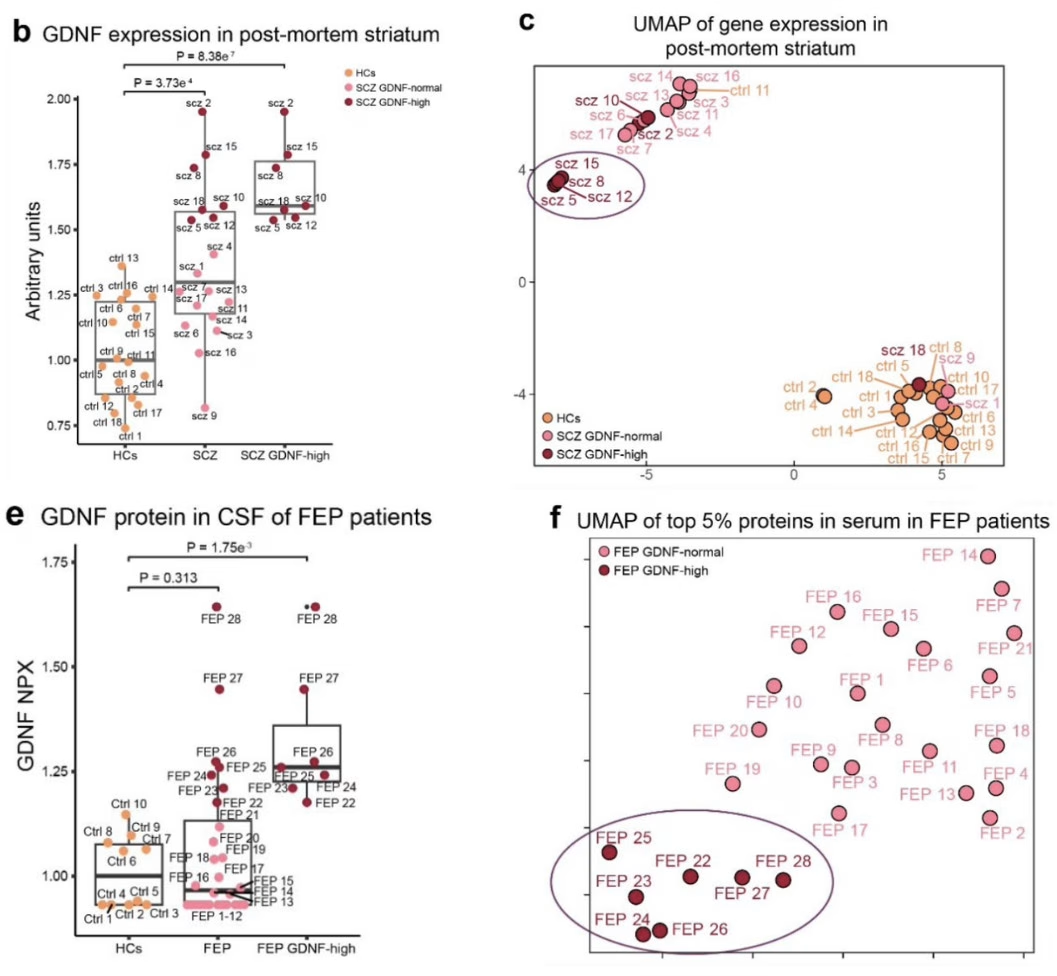
This graphic, adapted from the consortium’s pre-print research paper, illustrates their scientific journey from a laboratory discovery to a real-world medical tool. Reading from left to right, the charts show how the team first discovered a hidden ‘one-in-five’ patient subgroup by finding an overload of the GDNF protein in post-mortem brain tissue (Panel b), and mathematically proved that these individuals share a completely distinct biological map (Panel c). The lower panels show the breakthrough coming to life in the clinic: first, by successfully tracking the exact same protein overload in the cerebrospinal fluid of living first episode psychosis patients (Panel e), and finally, by demonstrating that this exact subgroup can be accurately identified through a simple, non-invasive blood test (Panel f).
Main Reference Article:
Matlik, K., Garton, D. R., Montano-Rodriguez, A. R., Olfat, S., Eren, F., Casserly, L., Damdimopoulos, A., Panhelainen, A., Porokuokka, L. L., Kopra, J. J., Turconi, G., Schweizer, N., Bereczki, E., Piehl, F., Engberg, G., Cervenka, S., Piepponen, T. P., Zhang, F. P., Sipila, P., . . . Andressoo, J. O. (2022). Elevated endogenous GDNF induces altered dopamine signalling in mice and correlates with clinical severity in schizophrenia. Mol Psychiatry. https://doi.org/10.1038/s41380-022-01554-2
Funded under ERA-Net NEURON Joint Transnational Call 2021 by the Academy of Finland (AKA), the Estonian Research Council (ETAg), and the German Federal Ministry of Research, Technology and Space (BMFTR).
Related
Project HYBRIDMINDS: Understanding the Ethical, Legal, and Human Dimensions of Neurotechnology and the “Hybrid Mind”
The HYBRIDMINDS project, a German-Swiss-Canadian collaboration funded under ERA-Net NEURON’s ELSA-JTC2020, aims to analyse the significance of neurotechnological developments from a legal perspective, and to advance human rights to meet fundamental human needs in the rapidly developing field of neurotechnology.
Project MulioBio: Rethinking Psychiatric Disorders - A Shift from Diagnostic Labels to Biological Mechanisms
What if psychiatric care focused less on diagnostic labels and more on what’s really happening in the body? The MulioBio project, funded by ERA-Net NEURON’s Joint Transnational Call 2019, set out to challenge traditional boundaries in psychiatry by identifying biological markers that correlate with symptoms—regardless of formal diagnosis.
ENTRUST-PE: A New Framework for Trustworthy Pain Research
In our new success story, we explore how the ENTRUST-PE project—funded under ERA-Net NEURON’s 2022 Networking Group Call—brought together an international network of experts to address a critical question at the heart of scientific integrity: How can we build a more trustworthy foundation for chronic pain research?