Project HYBRIDMINDS: Understanding the Ethical, Legal, and Human Dimensions of Neurotechnology and the “Hybrid Mind”
Neuroprostheses are devices that interface directly with the nervous system to restore, replace, or enhance lost neural functions. Today’s neuroprosthetic and brain-modulating/decoding devices address major health challenges including paralysis, Parkinson’s disease, epilepsy, depression, sensory loss, and stroke-related impairments. As these technologies progress at unprecedented speed, researchers in HYBRIDMINDS are working to ensure that ethical, legal, and societal considerations evolve alongside them.
Empirical Insights From the Largest Multi-Site Study of Neurotechnology Users
The HYBRIDMINDS consortium conducted the most comprehensive empirical investigation to date on what it means to live with neurotechnologies. The consortium asks foundational questions about the boundaries between humans and machines:
- Where does the body end and a neuroprosthesis begin?
- Can an algorithm that adjusts stimulation become part of the mind?
- How should responsibility, autonomy, and mental integrity be conceptualized when human and machine operate together?
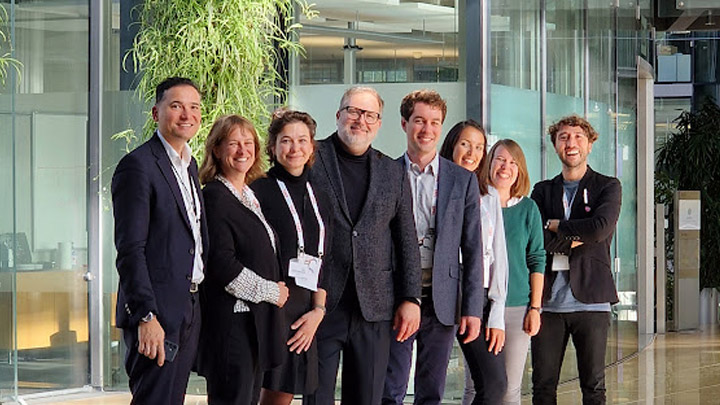
To explore these themes, researchers interviewed over 60 individuals across Germany, Switzerland, and Canada who use deep brain stimulation (DBS) or repetitive transcranial magnetic stimulation (rTMS) for movement disorders or psychiatric conditions. Participants provided detailed accounts of autonomy, identity, emotional change, sense of agency, device ownership, and the subtle psychological shifts associated with neural modulation.
They described instances when neurotechnologies feel like helpful tools, and moments when they feel like extensions of the self. Importantly, participants rejected the idea that neurotechnology diminishes personal responsibility. They also expressed a high level of trust in the technology and fewer concerns about privacy when the clinical benefits were evident. Overall, the findings highlight the importance of incorporating users’ lived experiences into ethical, clinical, and technological debates surrounding neurotechnology, offering a more realistic picture of its impact on daily life.
Developing the “Hybrid Mind” Concept: Ethical, Legal, and Philosophical Innovation
HYBRIDMINDS researchers also advanced the conceptual understanding of the “hybrid mind,” illustrating how human cognition and neurotechnologies can become functionally integrated. This work examines the philosophical, ethical, and legal implications of technologies that blur boundaries between mind, body, and device.
The consortium has contributed to key scholarly debate, publishing on subjects such as:
- Empersonification — the idea that AI-enabled neurodevices can become so integrated with a user’s mental processes that they function as parts of the person.
- Neurorights — emerging proposals for human rights protections relating to neural data, mental privacy, and cognitive agency.
These contributions clarify how existing human rights frameworks can adapt to emerging neurotechnological possibilities and offer guidance for ethical technology design, clinical governance, and future policy development.
Influencing Policy, Practice, and International Dialogue
The findings of HYBRIDMINDS are already shaping clinical practice, providing actionable guidance for informed consent, long-term patient support, and user-centered design of future devices. HYBRIDMINDS research also informs national regulatory discussions, with members of the consortium advising governments and contributing to international initiatives. HYBRIDMINDS has organized two public conferences—including a landmark event in Geneva aligned with the UN report on Human Rights and Neurotechnology—bringing together researchers, ethicists, lawyers, clinicians, and policymakers and accelerating global dialogue.
How International Collaboration Expanded the Research and Enriched the Analysis
Project coordinator Jennifer Chandler highlighted that ERA-Net NEURON’s support enabled multiple international teams to pool their networks and expertise, greatly expanding participant recruitment and strengthening the interdisciplinary analysis. Through this collaboration, HYBRIDMINDS integrated scientific, ethical, and legal perspectives from both continental European and Anglo-American traditions, significantly enhancing the reach and depth of the research.
Looking Ahead
The HYBRIDMINDS team continues to shape international human-rights discourse, clinical practice, and regulatory policy through their collaborative, empirically grounded work.
More information is available on their website at: https://www.hybridminds.org/
The HYBRIDMINDS consortium has offered our tri-national group an invaluable opportunity to pursue our deep commitment to seizing the benefits of developing neurotechnologies for people living with neurological impairments, while anticipating and responding to risks to fundamental human rights and societal interests. We look forward to continuing on with this, together and with the many trainees who were supported through the consortium, now as colleagues and good friends.
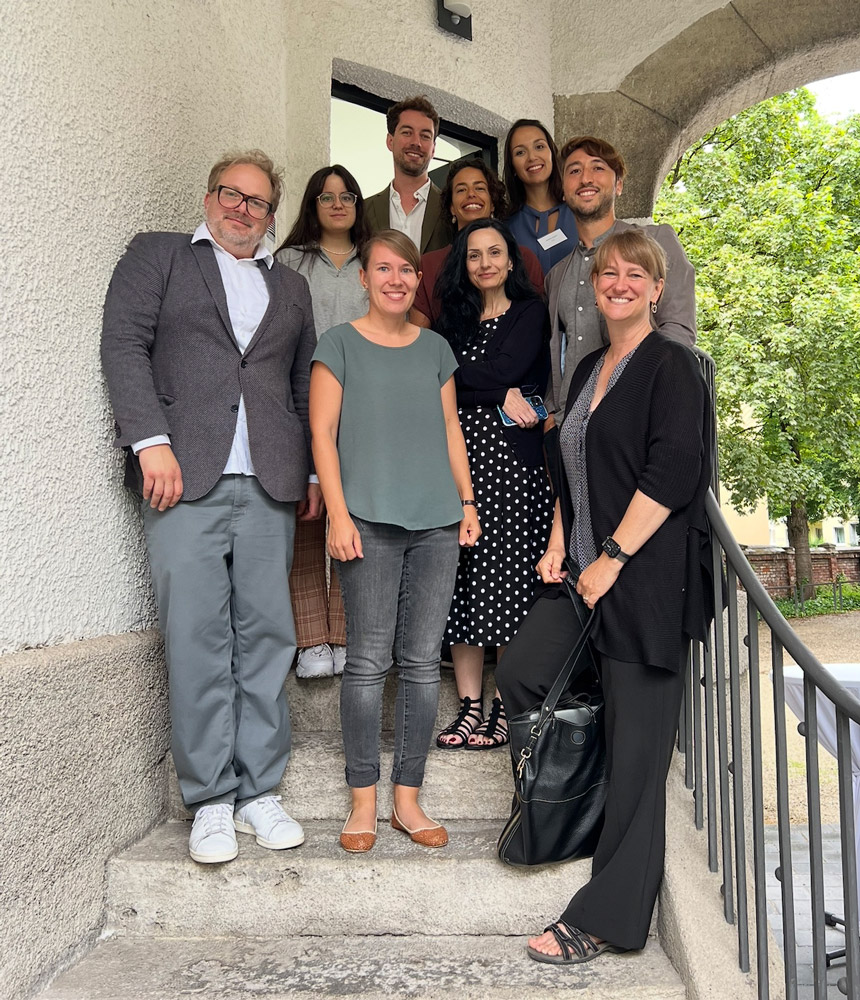
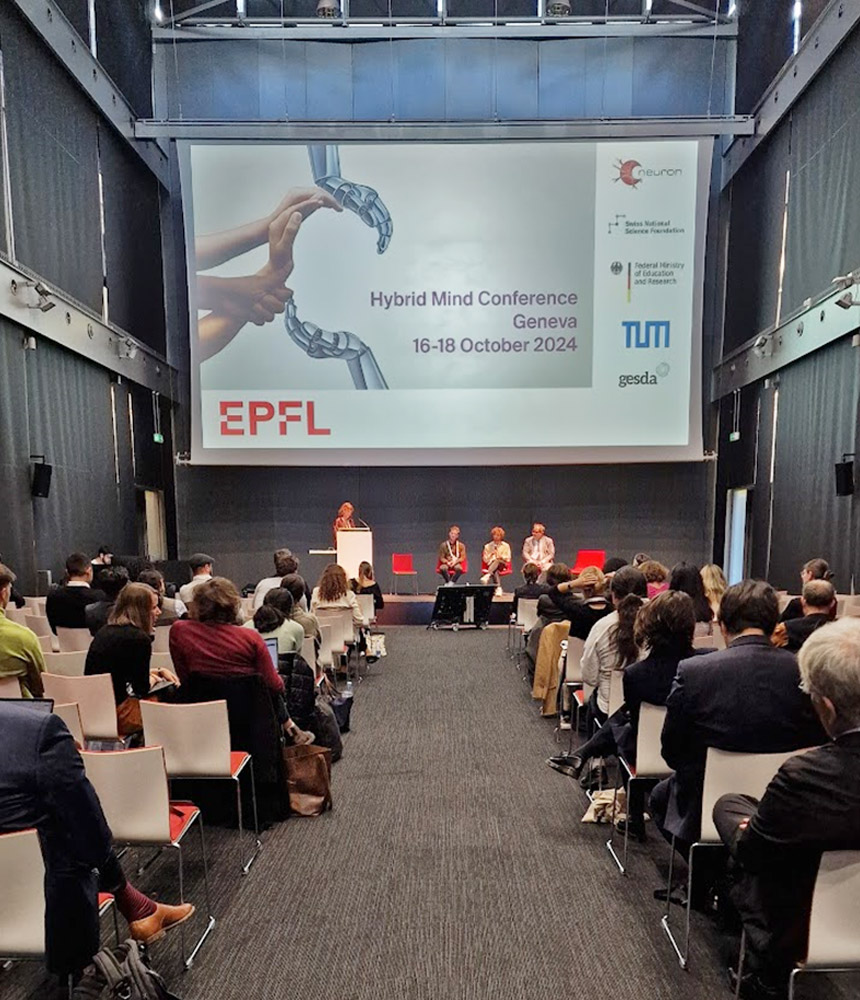
Publication Highlights:
Conceptualizing the hybrid mind
- Soekadar S , Chandler JA, Ienca M, & Bublitz JC. 2021. On the Verge of the Hybrid Mind. Morals and Machines 1(1) 30-43
- Basaran Akmazoglu T & Chandler JA. 2021.Mapping the emerging legal landscape for neuroprostheses: Human interests and legal resources. In: Hevia, M. (ed.) Developments in Neuroethics and Bioethics, 4, 63-98.
- Bublitz JC, Chandler JA & Ienca M. 2022.Human-machine Symbiosis and the Hybrid Mind: Implications for Ethics, Law and Human Rights. In Ienca et al.(eds.), Cambridge Handbook of Information Technology, Life Sciences and Human Rights. Cambridge University Press, 286.
- Bublitz JC. 2022.Might Artificial Intelligence Become Part of the Person, and What are the Key Ethical and Legal Implications? AI & Society. 39(3) 1095.
Neurorights
- Ienca M. 2021.On Neurorights. Frontiers in Human Neuroscience. 15:701258
- Bublitz JC. 2023.What an International Declaration on Neurotechnologies and Human Rights Could Look like: Ideas, Suggestions, Desiderata. AJOB Neuroscience 15(2) 96
- Bublitz JC. 2022.Novel Neurorights: From Nonsense to Substance. Neuroethics, 15:7
- Cassinadri G. & Ienca M. 2024. Non-voluntary BCI explantation: assessing possible neurorights violations in light of contrasting mental ontologies. Journal of Medical Ethics.;0:1–8.
Empirical research to understand the perspectives and experiences of users of neurotechnology
- Gilbert, F., Ienca, M., & Cook, M. (2023). How I became myself after merging with a computer: Does human-machine symbiosis raise human rights issues?. Brain Stimulation, 16(3), 783-789.
- Starke G, van Beinum A, Accoroni A, Apfel B, Basaran Akmazoglu T, Bublitz JC, Buthut M, Chandler JA, ColucciA, D’Imperio A, Fleury V, Lipsman N, Sentissi O, Soekadar SR, Tremblay S, Vermehren M, Ienca M. The Hybrid Mind: A Mixed-Methods Multisite Study on User Experiences and Ethical Challenges of Neurotechnologies.
- Apfel B, Colucci A, Vermehren M, Basaran Akmazoglu T, van Beinum A, Buthut M, Khwaileh F, Stark G, Bublitz JC, Chandler JA, Ienca M, Soekadar SR. Towards AI-enabled Adaptive Neurotechnology: Perspectives from Patients undergoing Therapeutic Neuromodulation.
- Basaran Akmazoglu T, Apfel B, Bublitz C, Buthut M, Colucci A, Lipsman N, Starke G, Soekadar SR, van Beinum A, Verhmehren M, Chandler JA. Human - Neurotechnology Hybridization: Dimensions of Integrating Neurotechnology in the Lived Experience of Neurotechnology Users