EBio2: Taming the Hidden "Brain Tsunamis" that Follow Severe Head Injuries
The Challenge: The Invisible Battle Inside the Neuro-ICU
For patients who survive a severe stroke or a traumatic brain injury (TBI), the initial injury itself is only the first challenge. Once they are stabilised and moved into a neuro-intensive care unit (ICU), a subsequent, undetectable crisis often begins to unfold.
When a person suffers a severe brain hemorrhage, specifically an aneurysmal subarachnoid hemorrhage (aSAH), nearly half of the permanent brain damage does not happen during the initial bleed. Instead, it is caused days later by a dangerous complication called delayed cerebral ischemia (DCI). Simply put, DCI is a severe medical crisis where secondary areas of the brain are slowly starved of blood and oxygen, leading to subsequent strokes (cell death as a result of lack of blood to parts of the brain). The problem is that because these high-risk patients are usually comatose or heavily sedated, patients are not able to communicate or exhibit the telltale signs of a stroke. To make matters worse, the standard hospital brain scans only show the effects of DCI and secondary strokes after the tissue has already died, when it is too late.
If the silent injuries of DCI go unmonitored, they can cause severe long-term complications, like epilepsy, months or even years later. To protect survivors of stroke and traumatic brain injury from the long-term effects of DCI, doctors need early warning signs that it is occurring while the damage is still reversible.
The Innovation: Catching “Short Circuits” Before a Stroke
The EBio2 consortium wanted to uncover the warning signs of blood starvation (DCI) early enough to save cells in the brain. To do this, they analysed 4.5 years of continuous brain recordings from a major clinical trial called DISCHARGE-1, which tracked electrical patterns as strokes were actively developing. This data led them to focus on a severe cellular short circuit known as Spreading Depolarisation (SD).
When healthy brain cells are compared to tiny batteries, an SD wave acts like a slow-motion chain reaction of short circuits rippling through the brain. It causes the batteries to lose almost all of their stored electrical energy and become inactive. This inactivity, known as electrical depression, typically persists beyond the SD. Using the clinical trial data, the team were able to map out the critical times that brain cells can remain in this depressed state before permanent damage ensues:
- The 60-Minute Warning (Reversible):
If a patient experiences a total of 60 minutes of electrical depression within a 24-hour window, the brain suffers, but the damage can still be reversed if doctors optimize blood flow and brain energy supply.
- The 180-Minute Tipping Point (Permanent):
If electrical depression continues for a cumulative total of 180 minutes, it predicts with near-certainty that a new, permanent stroke will occur.
By establishing these concrete numbers, EBio2 is providing ICU physicians a definitive plan of action. Instead of waiting for a permanent injury to appear on a routine hospital scan, doctors can catch the electrical warning signs at the 60-minute mark and launch immediate treatments to prevent stroke. This stands as the first major triumph of the EBio2 project.
How do SDs work? – The “Brain Tsunami” analogy
To help illustrate the mechanism of “Spreading Depolarization”, Prof. Dreier and his international colleagues coined the term “brain tsunami” to capture the idea of what is actually occurring in the brain. In a healthy brain, cells function like trillions of highly organized batteries, firing coordinated electrical impulses to one another across the brain to manage daily functions, such as movement, speech or thought. However, when a part of the brain is severely injured or starved of oxygen, an electrical failure occurs in these cells.
The tsunami analogy can explain the phenomenon of SDs in two distinct phases:
The Tidal Wave (The Short Circuit): Exactly like a massive ocean wave that slowly rolls across the coastline, this electrochemical failure physically travels across cells of the brain at a creeping pace of 2 to 5 millimeters per minute. As the front advances, it forces brain cells to drop their electrical charge down to near zero and short-circuit.
The Receding Water (Spreading Depression): Once this tidal wave of short-circuiting cells washes over a region, destruction is left, leaving brain cells to temporarily freeze and go quiet. On an ICU monitor, this shows up as a sudden flatline of brain waves that spreads along the cortex, known as spreading depression.
Predicting the Future: Stopping Epilepsy Years in Advance
The second major milestone of EBio2 addresses what happens to patients long after they leave the hospital. For brain injury survivors, the risk of developing epilepsy builds slowly over time. Roughly 10% of cases surface by five months, and 25% emerge by 18 months.
Scientists have suspected for twenty years that a leaky blood-brain barrier (BBB) triggers chronic inflammation and “rewires” the brain to cause seizures. The BBB is the protective biological shield that prevents harmful components in our blood from leaking into our brain tissue. The EBio2 consortium tracked leakiness in the BBB of survivors for an average of 3.7 years. Using automated MRI software, they discovered that if a patient’s post-injury scan shows a specific pocket of abnormal tissue where this protective barrier has broken down, that metric is the single strongest predictor of whether that individual will develop late-onset epilepsy or experience long-term mortality.
The EBio2 consortium has therefore provided the first clinical proof in human patients linking BBB leakage directly to future epilepsy. This monumental finding lays the groundwork for automated MRI software as a non-invasive tool to flag high-risk patients early and deploy targeted anti-inflammatory treatments before chronic seizures ever begin.
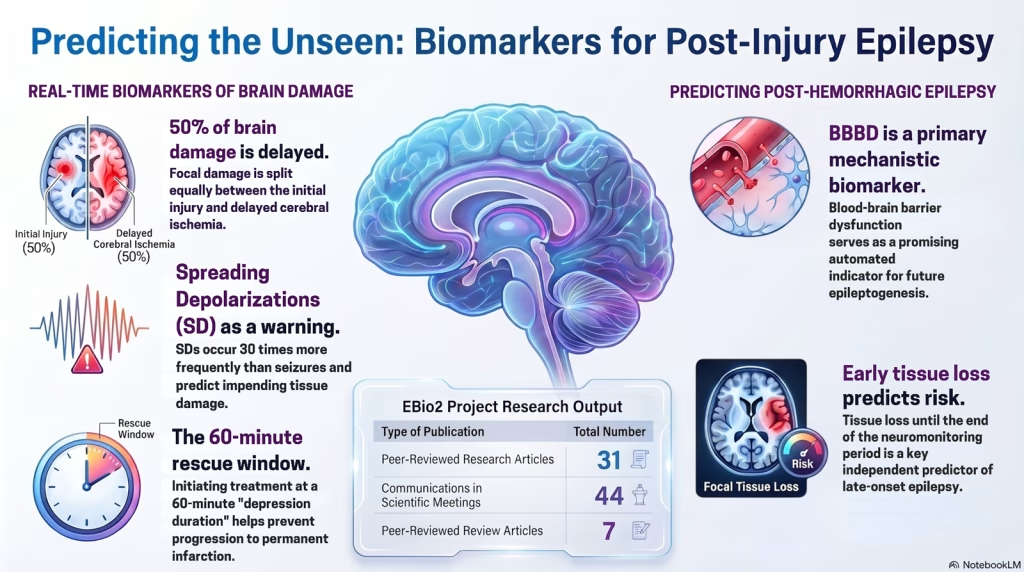
© AI-assisted graphic (Google NotebookLM), concept by Jens Dreier & the EBio2 Consortium.
While this predictive MRI technology is not yet in widespread clinical use, the team is actively working to bring it to the bedside. Through a funded follow-up project launching later this year, they aim to streamline the automated software and make it highly user-friendly, paving the way for its widespread adoption into hospitals.
Real-World Impact: Shaping the Future of Critical Care
The innovations generated by EBio2 are paving the way for a major shift in neurocritical care. To make brain tracking of SDs safer, the consortium successfully validated a much less invasive surgical monitoring method. Instead of requiring a major, highly invasive operation to open a patient’s skull, specialized recording strips can now be safely slid into place through a minor, routine “burr hole”, a technique actively being used in clinical practice today at leading centers, such as the University of Oldenburg. By utilizing a routine burr hole, this surgical refinement significantly lowers patient risk, making vital electrical protection accessible to far more individuals.
Moving forward, the team is actively validating an artificial intelligence-driven automated detection system. This AI will analyse brain activity in real time, automatically triggering a bedside alarm the moment a patient hits the 60-minute depression window, allowing ICU teams to protect vulnerable brain tissue immediately.
As the final reversible stage before ischemic neuronal death, spreading depolarization (SD) is not only an orderly retreat from life, but can also allow a reboot. SD is a biomarker of neuronal injury during neurocritical care and a compelling yet complex therapeutic target for neuroprotection.
The Power of Teamwork: From Bench to Bedside
This medical leap forward was made possible entirely by EBio2’s multinational design, which allowed a unique blend of animal and human medical research. Supported by ERA-Net NEURON, this high-impact framework brought together an international team to pool distinct specialties across borders, achieving breakthroughs that would have been impossible for a single country working alone.
The consortium divided this complex “bench-to-bedside” workload across three main international hubs:
- Germany (Led by Project Coordinator Prof. Jens P. Dreier): Managed the human clinical monitoring. His team analysed continuous brain recordings (ECoG) from ICU patients to capture “brain tsunamis” (SDs) in real time, establishing the critical 60 and 180-minute treatment thresholds.
- Canada (Led by Prof. Alon Friedman): Spearheaded neuroimaging and data linking. His team developed software to segment human MRI brain scans, allowing the consortium to track blood-brain barrier leaks and cross-reference them with electrical flatlines to predict late-onset epilepsy.
- Italy (Led by Dr. Annamaria Vezzani): Handled preclinical animal models and drug testing. Her laboratory used infantile rat models to map how early-life seizures cause long-term memory decline, while also proving that an FDA-approved drug called memantine can structurally block SDs to protect vulnerable brain tissue and improve blood flow.
By seamlessly bringing these pieces together, this collaboration has not only uncovered the critical early warning signs of stroke complications, but has also opened the door to powerful new drug therapies to protect the brain after an injury.
By seamlessly bringing these pieces together, this collaboration has not only uncovered the critical early warning signs of stroke complications, but has also opened the door to powerful new drug therapies to protect the brain after an injury.
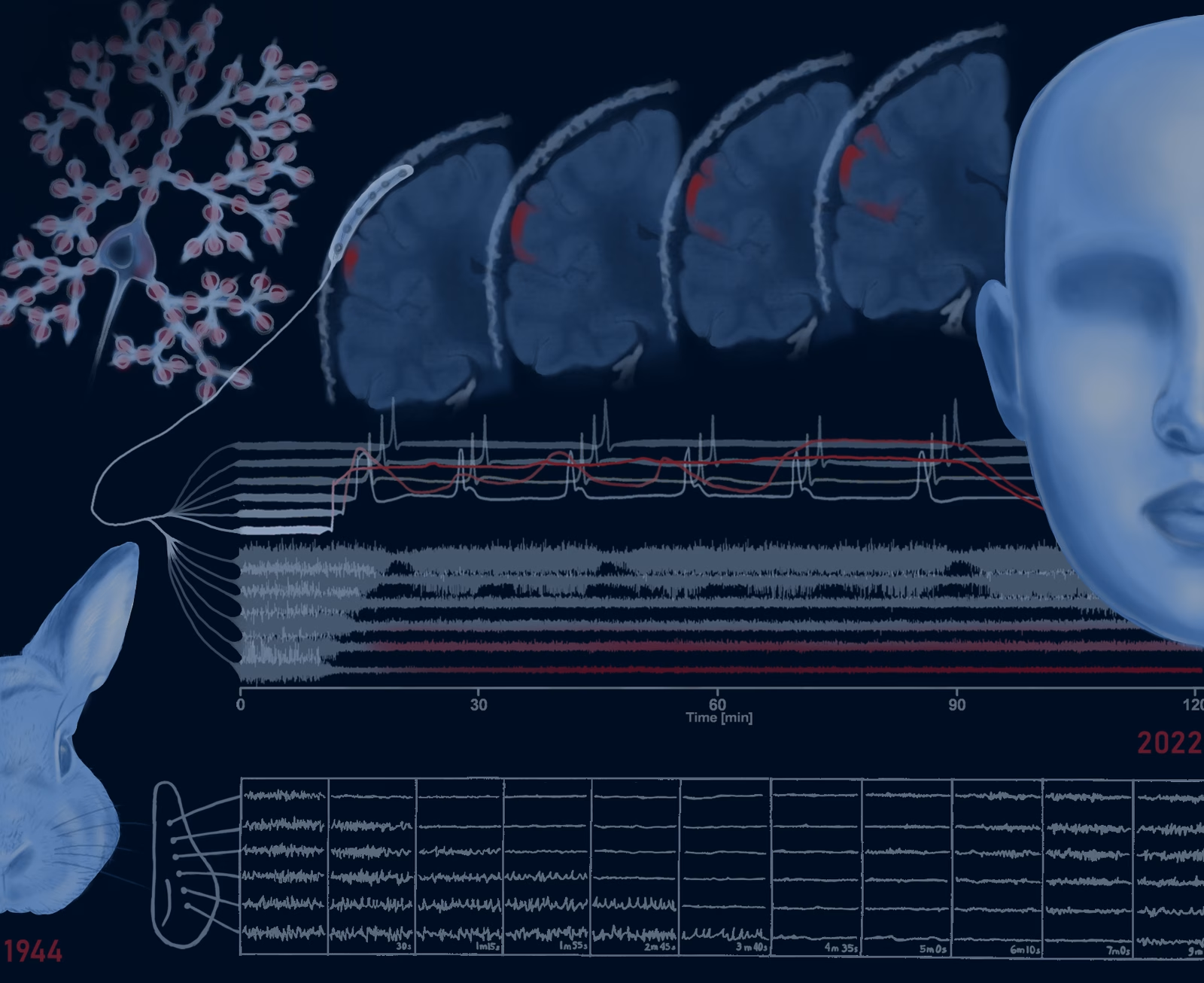
© EBio2 Consortium
The EBio2 project was supported by:
- German Federal Ministry of Education and Research (BMBF)
- Canadian Institutes of Health Research (CIHR)
- Italian Ministry of Health (MOH)
under the frame of ERA-Net NEURON JTC2019.