ERA-Net NEURON plenary lecture at FENS Forum 2026 in Barcelona spotlights the European Partnership for Brain Health
Barcelona, Spain – July 7, 2026 – The FENS Forum hosted a landmark ERA-Net NEURON plenary lecture celebrating nearly two decades of European scientific collaboration while presenting a forward-looking vision for the future of brain research through the European Partnership for Brain Health (EP BrainHealth).
The session opened with remarks by Dr. Ulrike Bußhoff, Coordinator of ERA-Net NEURON, who reflected on the network’s remarkable development since its launch in 2008. As one of the longest-running ERA-NET initiatives, ERA-Net NEURON has played a pivotal role in coordinating and aligning national research funding organizations across neuroscience, neurology, and psychiatry. Over the years, it has become a driving force for international scientific collaboration, supporting innovative research and strengthening the European neuroscience community.
Dr. Bußhoff announced that, while ERA-Net NEURON is approaching the conclusion of its current phase, its legacy will continue through the European Partnership for Brain Health (EP BrainHealth). Building on the strong foundation established by ERA-Net NEURON, EP BrainHealth will integrate, expand, and strengthen collaborative efforts within a long-term strategic framework. By reducing fragmentation and enhancing coordination, the partnership aims to create a comprehensive European Brain Health Ecosystem that accelerates scientific discovery, improves patient outcomes, strengthens Europe’s research competitiveness, and contributes to societal well-being.
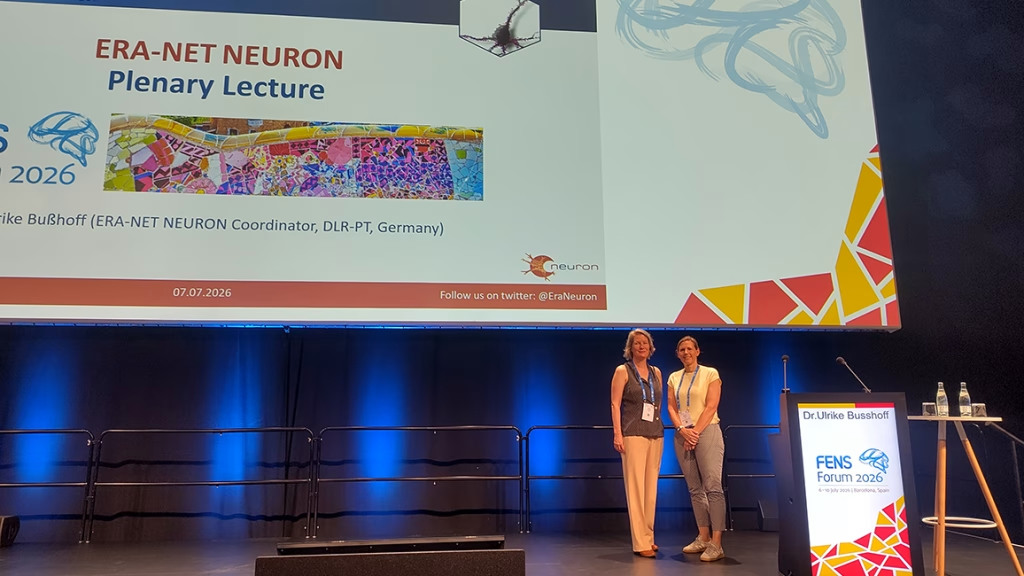
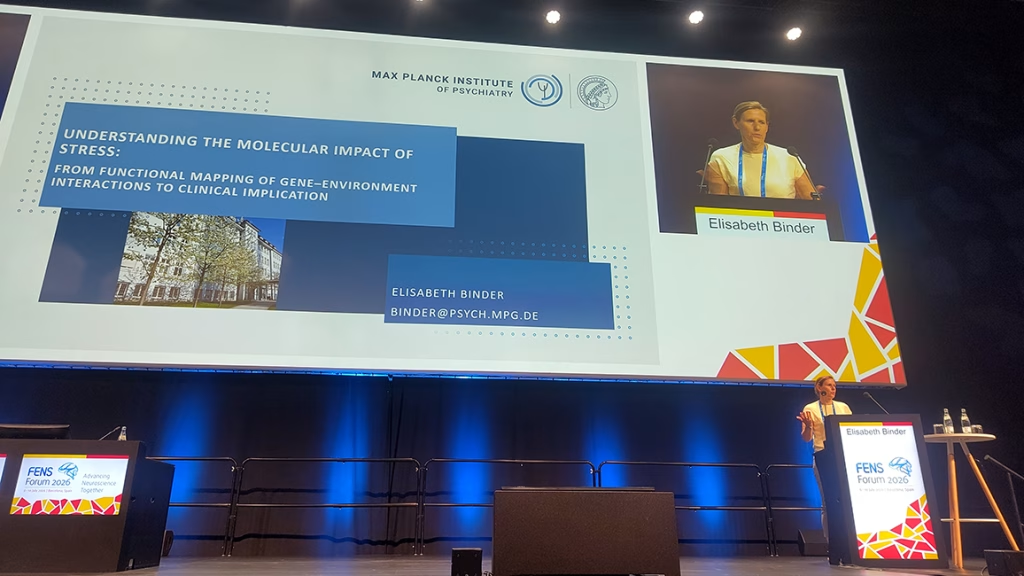
The scientific highlight of the session was the plenary lecture by Professor Elisabeth Binder, Director of the Department of Genes and Environment at the Max Planck Institute of Psychiatry in Munich, Germany. In her presentation, “Understanding the Molecular Impact of Stress: From Functional Mapping of Gene–Environment Interactions to Clinical Implications,” Professor Binder showcased pioneering research exploring the complex interplay between genetics, epigenetics, and environmental influences.
Her work has fundamentally advanced our understanding of how stress affects brain function and mental health. By mapping gene–environment interactions and identifying the molecular mechanisms that shape vulnerability and resilience to psychiatric disorders, Professor Binder’s research bridges the gap between fundamental neuroscience and clinical practice. She demonstrated how epigenetic mechanisms, including DNA methylation, can act as a molecular record of life experiences, influencing long-term mental health trajectories and offering new opportunities for precision medicine.
The lecture highlighted the importance of interdisciplinary research in neuroscience and illustrated how molecular discoveries can support earlier diagnosis, more personalized treatment strategies, and preventive approaches to mental health care.
As the FENS Forum continues to showcase the latest advances in neuroscience, this plenary session served as a powerful reminder of the impact of sustained international collaboration. It celebrated the achievements of ERA-Net NEURON while introducing the next chapter in European brain research through EP BrainHealth, reaffirming a shared commitment to advancing scientific excellence and improving brain health across Europe.