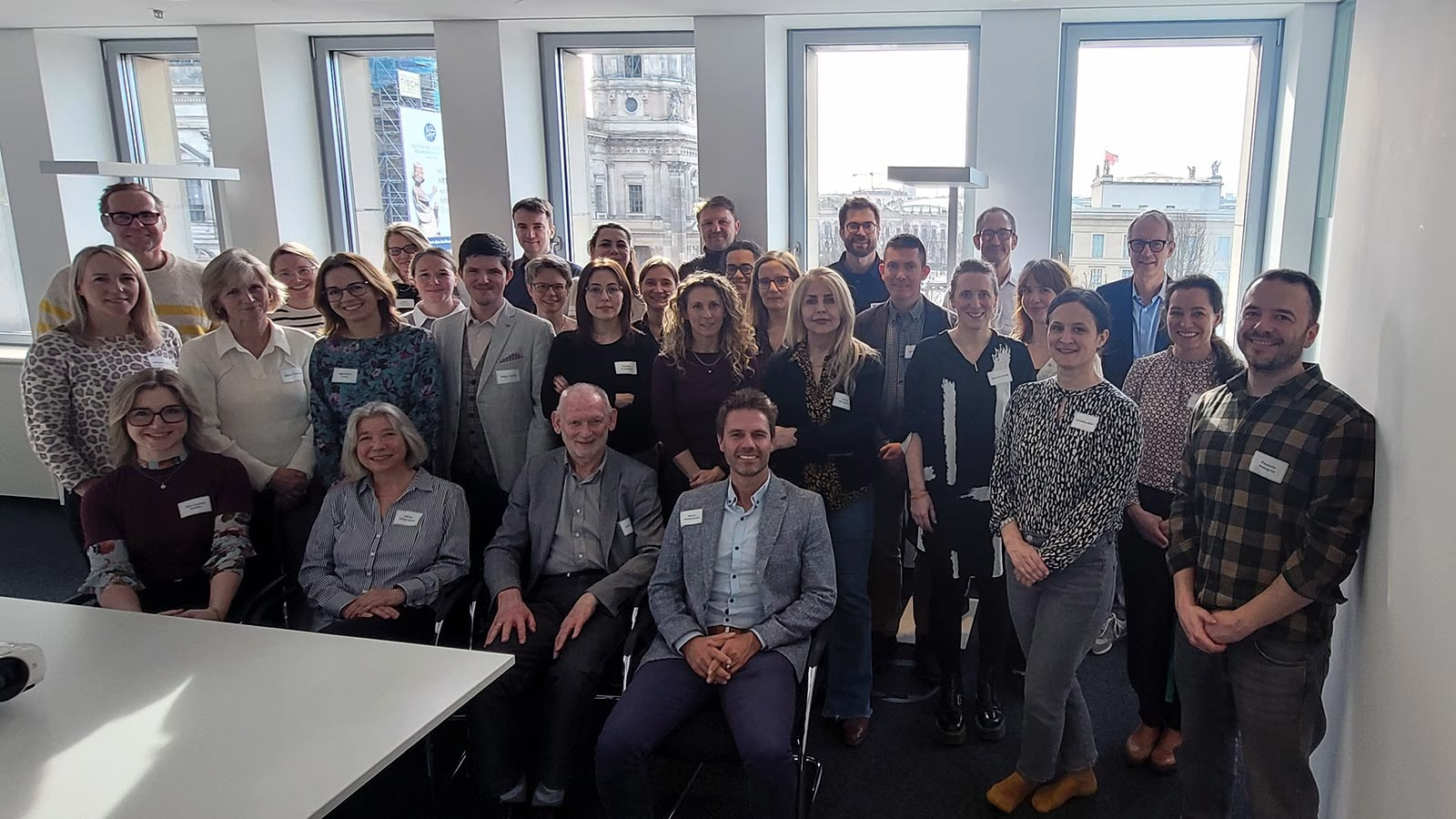
Better brain research together: NEURON and JPND projects met in Berlin for an open science workshop, 25–27 February 2026
On February 25th – 27th, 2026 the ERA-Net NEURON conducted in cooperation with the Berlin Institute of Health (BIH) QUEST Center and under the umbrella of the European partnership for BrainHealth the Open Science workshop for 23 funded projects ERA Net NEURON, JTC 2025 ‘Interdisciplinary Approaches to the Neuroscience of Pain’ and JPND JTCs 2023, 2024 and 2025 ‘Health and Social Care Research with a Focus on the Moderate and Late Stages of Neurodegenerative Diseases Projects’ projects.
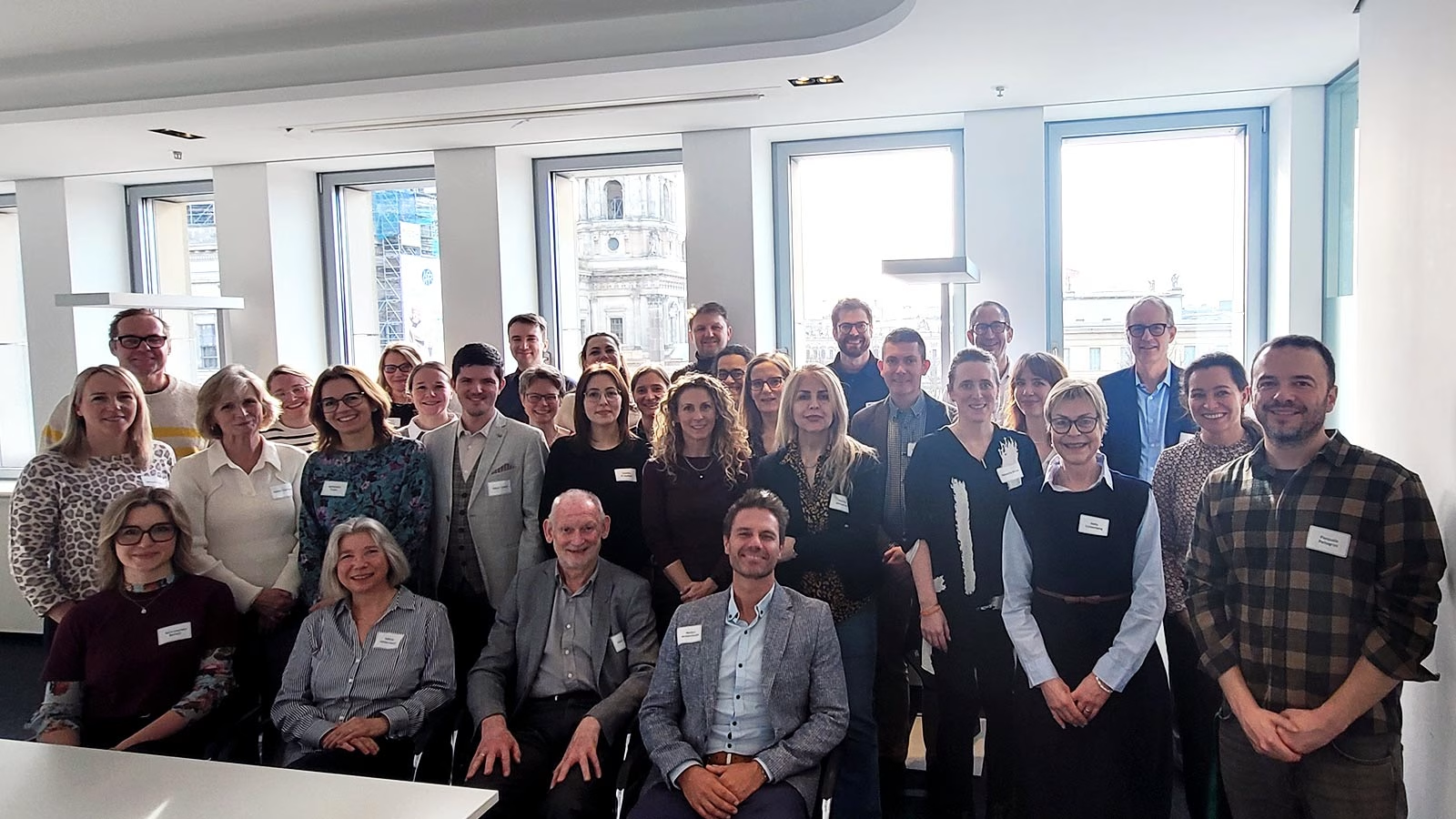
This was a pilot workshop in the combination of NEURON and JPND projects and thus innovative bio-medical and public health projects to address real-world challenges. All participants were excited to share ideas that bridge research, practice, and perhaps impact across disciplines. The workshop offered a collaborative space to learn, discuss, and inspire progress in health. In view and under the umbrella of the European Partnership for BrainHealth this is important to promote the future joining of the scientific communities.
In brilliant spring weather 41 participants, instructors and organizers discussed in this 2,5 day workshop research robustness and reproducibility, infrastructures, data management plans, neuroethics and AI and – not least – public and patient involvement in research.
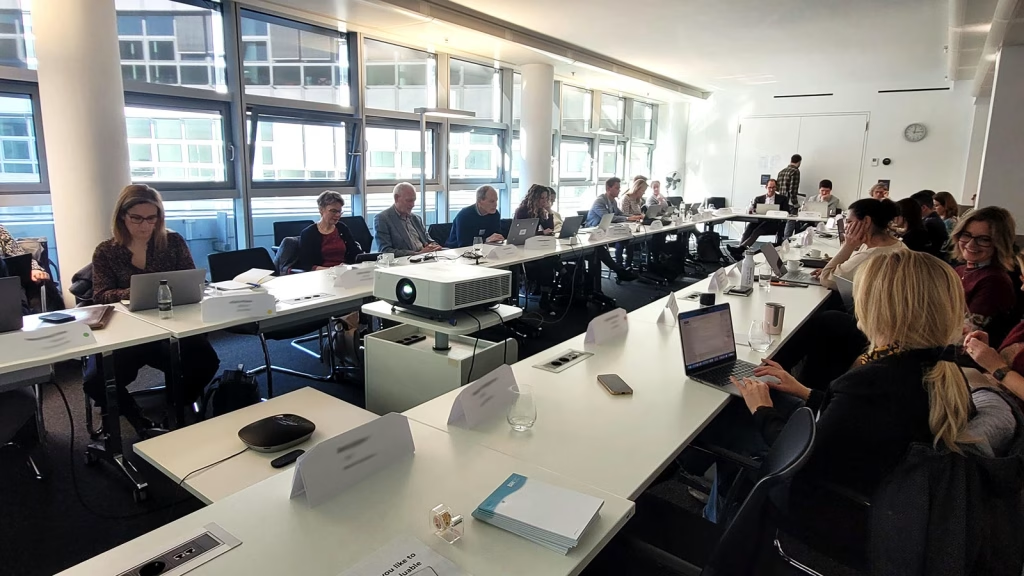
The program of the 2,5-day workshop comprised several key elements:
- An introduction to the ESFRI INFRAFRONTIER, the European Mouse Mutant Archive (EMMA), and the German Mouse Clinic by Dr. Sabine Hölter, head of the Behavioural Unit at the German Mouse Clinic at Helmholtz Munich, Germany, because most of the funded projects involve animal as well as human studies.
- A presentation of questions in neuroethics and the challenges arising from Artifical Intelligence (AI)-Ethics, by Dr. Julia Inthorn, Professor for Applied Ethics at the Munich School of Philosophy. Since the European AI act 2024, research projects might be required to assess the risk categories when implementing tools like machine learning on (large) data sets.
- A tutorial session on the creation of the Data Management Plan (DMP) by Dr. Marek Suchanek, Czech Technical University in Prague, Czech Republic for using the Data Stewardship Wizard (DSW), an open-source and collaborative platform for data management planning.
- Important core elements of the workshop were interactive sessions on experimental design with focus on internal, external and translational validity, and reliability provided by Dr. Natascha Drude, head of the Responsible PrecliniX Unit at BIH-QUEST, and Dr. Ulf Tölch, group leader of the Systemic Perspectives in Translational Biomedicine – Training & Quality in Research at BIH-QUEST.
As a new and most exciting element, the interactive session on Patient and Public Involvement (PPI) in research comprised a speed-dating format where participants met patient (reviewer) representatives for rotating short discussions on the active involvement of patients and other relevant stakeholders in the research process.
Excellent workshop. It was great to meet the people behind the JTC2025 funding proposals. It was a privilege to both watch and participate in the linkages and synergies which emerged in Berlin and which will continue to fructify.
The workshop for funded projects is intended to help the new consortia in getting started with the brand-new projects. Besides a rich resource hub at our webpage, the workshop addresses practical issues for the work in an international project. Not least, it provides an opportunity for networking among all funded projects.
The JTCs in 2025 were the last calls in the longstanding funding formats NEURON and JPND. Both initiatives will come to a near end, however not without merging into something new and bigger, the European Partnership for BrainHealth. This new partnership will continue to address the topics of the previous initiatives, but will become more inclusive and wider in scope and will pursue a holistic approach to brain health. Having started in 2026, the European Partnership for BrainHealth launches joint transnational calls (JTCs) on an annual basis in the field of brain health to invite translational multidisciplinary research consortia. The current calls launched in January address biological, social and environmental factors that impact the trajectory of brain health across the lifespan in both, the field of neurological, mental and sensory disorders and in the field of neurodegeneration. The highly valued QUEST workshops will be continued in the frame of the partnership.